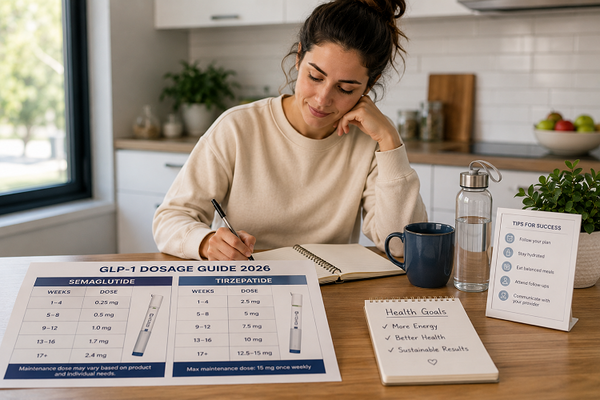
If you currently take a weight management or diabetes medication, you might be wondering about your long-term options. Many patients begin their health journey with one treatment, only to find that their physical needs evolve over time.
Switching from semaglutide to tirzepatide has become a common topic of discussion in doctors' offices. Patients often seek out this transition to overcome a weight loss plateau or to achieve better metabolic results. However, changing prescription medications requires careful planning and professional medical guidance.
This guide will explain exactly what a semaglutide to tirzepatide switch entails. You will learn the core differences between these treatments, the reasons patients make the change, and the necessary safety protocols to follow during your transition.
Understanding GLP-1 Medications
The class of medications known as GLP-1 receptor agonists has transformed how doctors treat type 2 diabetes and chronic weight management. These medications mimic natural hormones in your body that regulate appetite and blood sugar levels.
Before discussing a mounjaro vs semaglutide switch, you must understand how each medication functions individually. While they share similarities, their chemical mechanisms differ significantly.
What is Semaglutide?
Semaglutide is the active ingredient found in brand-name medications like Ozempic and Wegovy. It operates specifically as a single-hormone receptor agonist.
- It mimics the GLP-1 hormone to stimulate insulin production.
- The medication slows down gastric emptying to keep you full longer.
- Doctors prescribe it primarily for type 2 diabetes and clinical weight loss.
What is Tirzepatide?
Tirzepatide is the active ingredient in medications such as Mounjaro and Zepbound. It represents a newer generation of metabolic treatments with a dual-action mechanism.
- It targets both GIP and GLP-1 hormone receptors simultaneously.
- This dual action generally produces a stronger metabolic effect.
- Clinical trials show it often yields greater average weight reduction.
Key Differences Between the Medications
The primary difference between tirzepatide vs semaglutide lies in their receptor targets. Because tirzepatide activates two distinct hormone receptors (GIP and GLP-1) rather than just one, it can create a more pronounced effect on insulin sensitivity and fat utilization.
Another major difference involves dosing structures. While both are injectable medications taken once a week, their milligram dosages are not equivalent. You cannot simply swap one dose for the same numerical dose of the other. Your healthcare provider must calculate a specific starting dose based on your current treatment plan and medical history. You can review [dosage charts] with your doctor to understand this conversion.
Common Reasons Patients Switch
Patients do not usually change their medications without a specific medical catalyst. A GLP-1 switching guide often highlights several recurring themes that prompt a discussion with a physician.
Your doctor might suggest transitioning to tirzepatide if your current treatment no longer provides the necessary results.
- Weight loss plateau: You have stopped losing weight despite maintaining diet and exercise habits.
- Appetite control: You need stronger suppression of hunger signals and food noise.
- Side effect tolerance: You experience lingering side effects with your current medication that a different formulation might resolve.
How to Switch Safely
Learning how to switch GLP-1 medications safely is critical for your health. You should never attempt to transition between these drugs without direct supervision from a qualified healthcare provider.
Proper timing is the most important element of a safe transition. Your doctor will likely instruct you to take your last dose of semaglutide, wait a full week, and then administer your first dose of tirzepatide on your normal injection day.
- Never overlap or take both medications at the same time.
- Strictly follow your doctor's dosing instructions.
- Allow proper time between doses to clear the previous medication.
What to Expect After the Switch
Once you begin taking tirzepatide, your body will need time to adapt to the new dual-agonist mechanism. Many patients report feeling different within the first few weeks of their new prescription.
You may notice changes in your daily eating habits and digestion. Because tirzepatide acts on the GIP receptor in addition to the GLP-1 receptor, the feeling of fullness might feel more intense.
- You could experience changes in your appetite suppression.
- You may see an improved weight loss potential over the coming months.
- You might develop new side effects that differ from your previous experience.
Potential Transition Side Effects
Any medication change carries the risk of side effects. Even if you tolerated semaglutide perfectly well, transitioning to a new chemical compound can temporarily disrupt your digestive system.
The majority of these symptoms happen during the first few weeks as your body adjusts to the new medication. Most patients find that these issues subside once their system adapts to the dual-agonist formula. For more information, read our comprehensive guide on [GLP-1 side effects].
- Mild to moderate nausea after meals.
- General digestive discomfort, including bloating or constipation.
- Temporary adjustment symptoms like fatigue or mild headaches.
Important Safety Considerations
Safety must remain your top priority when navigating a semaglutide to tirzepatide switch. Treating these medications with respect ensures you get the maximum benefit with the least amount of risk.
You should monitor your body closely during the first month of your new prescription. Keep a daily log of how you feel, what you eat, and any physical changes you notice. Read our full [safety guide] to learn how to track your progress effectively.
- Always wait for your doctor to approve dosage adjustments.
- Monitor your symptoms daily during the transition phase.
- Completely avoid self-medicating or changing your schedule independently.
When to Consult a Healthcare Provider
While mild digestive changes are completely normal during a medication switch, certain symptoms require immediate professional attention. You should always err on the side of caution when altering your metabolic treatments.
- Contact your doctor if you experience severe side effects or dehydration.
- Call the clinic if you have an unclear dosing schedule.
- Seek immediate help if the change exacerbates underlying medical conditions.