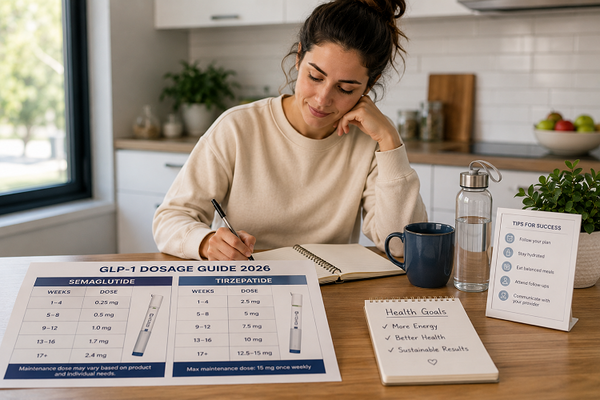
The branded semaglutide price often exceeds $1,000 monthly for patients without insurance. Meanwhile, the compounded semaglutide cost typically ranges between $200 and $400 per month. Choosing between compounded vs branded semaglutide depends on your budget, insurance coverage, and access to a verified, physician-supervised pharmacy.
What exactly is semaglutide and how does it work?
Semaglutide belongs to a class of medications known as GLP-1 receptor agonists. It mimics a naturally occurring hormone in the human body that regulates appetite and stabilizes blood sugar levels. Physicians frequently prescribe this medication to help patients manage type 2 diabetes and support chronic, long-term weight management.
By slowing down gastric emptying, this medication helps patients feel fuller for much longer periods. It also signals the brain directly to reduce physical hunger and persistent cravings. This specialized mechanism of action makes it a highly effective medical tool when properly combined with strategic lifestyle modifications.
What is branded semaglutide?
Branded semaglutide refers to the official FDA-approved medications researched and manufactured exclusively by Novo Nordisk. These pharmaceutical products are sold commercially under specific, well-known brand names like Wegovy, Ozempic, and Rybelsus. Each branded version has highly specific approved medical indications, ranging from cardiovascular risk reduction to clinical weight management.
These branded medications undergo years of rigorous clinical trials to definitively prove their safety and overall efficacy. They are conveniently dispensed to patients in pre-filled, single-use autoinjector pens for easy administration. Because a single global manufacturer holds the official patent, they control the global supply and the branded semaglutide price.
What is compounded semaglutide?
Compounded semaglutide is a custom-made alternative medication prepared strictly by a state-licensed compounding pharmacy. When branded pharmaceutical drugs face official national shortages, the FDA legally permits compounding pharmacies to produce viable alternatives. These highly regulated facilities use the pure active pharmaceutical ingredient to create a medication that meets specific patient needs.
Unlike the branded commercial versions, compounded medications do not come in proprietary autoinjector pens. Patients typically receive their customized medication in a traditional glass vial and use small insulin syringes for administration. This specialized delivery method requires careful instruction and oversight from a physician-led program to ensure perfectly accurate dosing.
How does the cost comparison of compounded vs branded semaglutide look?
A direct semaglutide cost comparison reveals a significant and undeniable financial gap for patients paying entirely out-of-pocket. The high GLP-1 cost without insurance remains a major barrier for many individuals seeking medical weight loss assistance. Here is a general breakdown of the expected monthly semaglutide cost depending on the medication path you take:
- Branded Semaglutide: Typically costs between $900 and $1,400 per month without comprehensive insurance coverage.
- Compounded Semaglutide: Usually ranges from $200 to $400 per month, heavily depending on the pharmacy and prescribed dosage.
- Hidden Medical Fees: Branded drug costs rarely include physician visit fees, whereas compounded weight loss programs often bundle medical consultations together.
Why is the branded semaglutide price so much higher?
Developing a completely new pharmaceutical drug requires billions of dollars in intensive research, clinical trials, and strict regulatory approvals. The drug manufacturer holds exclusive patent rights for years, allowing them to legally set prices to recoup massive corporate investments. This expected lack of market competition naturally keeps the branded semaglutide price elevated across the healthcare industry.
Additionally, the manufacturing process for patented, user-friendly autoinjector pens is highly complex and incredibly expensive. These proprietary delivery devices add a significant amount of overhead to the final retail cost of the product. Compounding pharmacies easily avoid these massive manufacturing costs by simply using standard vials and pure, generic active ingredients.
Is compounded semaglutide safe and legitimate to use?
Compounded medications can be perfectly safe when carefully sourced from heavily regulated, State Board of Pharmacy-licensed facilities. However, these specific custom formulations are not explicitly evaluated by the FDA for safety or exact clinical efficacy. Patients must exercise extreme caution to avoid unregulated online vendors selling unverified or potentially dangerous counterfeit products.
The safest possible approach is to strictly use a physician-supervised program that specifically partners with a 503A or 503B compounding pharmacy. These specific, highly regulated pharmacies adhere to incredibly strict quality control standards and source pure active pharmaceutical ingredients. Always consult directly with a licensed healthcare provider to thoroughly verify the legal legitimacy of your medication source.
What are the key factors to consider before choosing your medication?
When carefully evaluating compounded vs branded semaglutide, the retail price should absolutely not be the only deciding factor. Patients must realistically consider their detailed medical history, current insurance status, and comfort level with different medication injection methods. Review these critical key factors extensively with your licensed physician before making any final treatment decisions:
- Insurance Coverage: Check immediately if your current health plan completely covers branded GLP-1s, which could make them highly affordable.
- Pharmacy Quality: Ensure any customized compounded medication clearly comes from a fully licensed, thoroughly verified facility within the United States.
- Administration Method: Decide honestly if you strongly prefer the convenience of an autoinjector pen or are perfectly comfortable using standard syringes.
Who should choose compounded vs branded semaglutide?
The final choice between these two distinct options highly depends on your personal financial situation and specific medical needs. A trusted physician can easily help you correctly determine the safest and most sustainable path for your long-term health. Consider these general patient profiles carefully when making your ultimate medication decision:
- Choose Branded If: You have strong insurance coverage, require FDA-approved autoinjector pens, or strongly prefer the security of rigorously tested commercial drugs.
- Choose Compounded If: The GLP-1 cost without insurance is entirely prohibitive, your physician highly recommends it during an active drug shortage, and you use a trusted pharmacy.