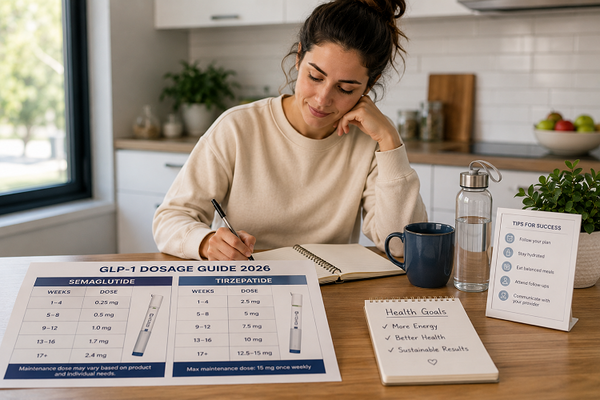
Once you've completed dose escalation, you may find yourself wondering what comes next with your semaglutide maintenance dose. This stage represents the long-term phase of treatment, where your provider has identified a dose that fits your specific health needs.
This guide explains how the maintenance dose is determined, what it typically looks like across different products, and why ongoing physician involvement remains important.
What Is a Semaglutide Maintenance Dose?
A semaglutide maintenance dose is the stable, ongoing dose a patient continues taking after completing the initial titration period. Rather than continuing to increase, treatment shifts to a consistent weekly amount designed to support long-term results.
This dose isn't a fixed number that applies to everyone. It's determined individually based on how a patient responded during semaglutide titration and their specific treatment goals.
How Patients Reach the Maintenance Dose Through Titration
Reaching a maintenance dose typically follows a gradual semaglutide dosing schedule, starting with a low initial dose and increasing incrementally over several weeks. This process allows the body to adjust while minimizing side effects.
Each step of the titration process gives a provider the chance to evaluate tolerability before advancing further. Once a patient reaches a dose that balances effectiveness with manageable side effects, that level often becomes the long-term maintenance dose.
Standard Maintenance Doses for Different Semaglutide Products
Maintenance dosing varies depending on the specific FDA-approved product and its intended use. The Wegovy maintenance dose is commonly set at 1.7 mg or 2.4 mg once weekly, depending on clinical need and patient response.
The Ozempic maintenance dose, by comparison, is typically 0.5 mg, 1 mg, or 2 mg once weekly, based on treatment goals and physician guidance. These differences reflect the fact that each product is approved for slightly different uses, even though both rely on the same active ingredient.
Why Products Differ in Dosing
Wegovy is approved specifically for chronic weight management, while Ozempic is approved for type 2 diabetes treatment. This distinction is part of why their respective maintenance ranges differ, even though both involve a weekly semaglutide injection.
How Physicians Determine the Right Maintenance Dose
Physicians consider several factors when settling on a maintenance dose, including how a patient responded during titration and any side effects experienced along the way. Treatment goals, whether related to semaglutide for weight loss or semaglutide for type 2 diabetes, also play a role.
Not every patient requires the highest available maintenance dose. Some patients see meaningful results at a lower dose, and their provider may choose to keep them there if it offers adequate benefit with fewer side effects.
Can Your Maintenance Dose Be Increased or Decreased?
Yes, maintenance doses can be adjusted, but only under medical supervision. If a patient isn't responding as expected, a provider may consider a modest increase, within approved limits.
Similarly, if side effects become difficult to manage, a provider might lower the dose while still aiming to maintain treatment benefits. Patients should never change their maintenance dose without medical supervision, even if they feel confident about the adjustment.
Common Side Effects at the Maintenance Dose
Side effects at the maintenance stage are often milder than during titration, since the body has had time to adjust. Still, some patients continue to notice mild symptoms.
Commonly reported side effects at this stage include:
- Occasional nausea or mild stomach discomfort
- Reduced appetite
- Infrequent digestive changes, such as constipation
Any new or worsening side effects should be discussed with your provider rather than managed independently.
What Happens If You Miss Doses or Stop Treatment
Missing an occasional dose during long-term semaglutide treatment is generally manageable, though your provider can advise on the best way to get back on schedule. Stopping treatment altogether is a different matter and should always involve a conversation with your care team first.
Discontinuing semaglutide without medical guidance can affect treatment outcomes, particularly for patients managing chronic conditions. Your provider can help determine whether adjustments, rather than stopping entirely, might be more appropriate.
Why Physician Supervision Is Important During Long-Term Therapy
Physician-supervised weight loss and diabetes care don't end once a maintenance dose is established. Ongoing check-ins allow your provider to monitor how you're responding over time and make adjustments if your health needs change.
This is especially relevant for semaglutide therapy, where long-term effectiveness depends on continued evaluation rather than a one-time decision. Regular follow-up remains a core part of safe, sustained treatment.
Tips for Staying Consistent With Your Maintenance Dose
Consistency plays a meaningful role in supporting steady treatment results. A few simple habits can help.
- Set a recurring weekly reminder for your injection
- Keep track of how you're feeling between provider visits
- Bring questions or concerns to each follow-up appointment, even minor ones
These habits support open communication with your care team and help catch potential issues early.
Frequently Asked Questions
Is 2.4 mg always the goal for weight loss patients on semaglutide? No. While 2.4 mg is the highest approved maintenance dose for Wegovy, many patients achieve their goals at 1.7 mg or another appropriate level, based on their provider's assessment.
Can I switch from Ozempic to Wegovy or vice versa on my own? No. These products have different approved uses and dosing structures, and any change should be made only through a licensed healthcare provider.
What if my maintenance dose stops working as well as before? Reach out to your provider. They can evaluate your response and determine whether a dose adjustment or a different approach is appropriate.
Final Guidance and Next Steps
Finding the right semaglutide maintenance dose is a personalized process that depends on your specific product, treatment goals, and how your body responds over time. It's not a one-size-fits-all number, and ongoing medical guidance remains essential.
Before making any changes to your semaglutide treatment, consult a licensed healthcare provider who can evaluate your progress and recommend the safest path forward.