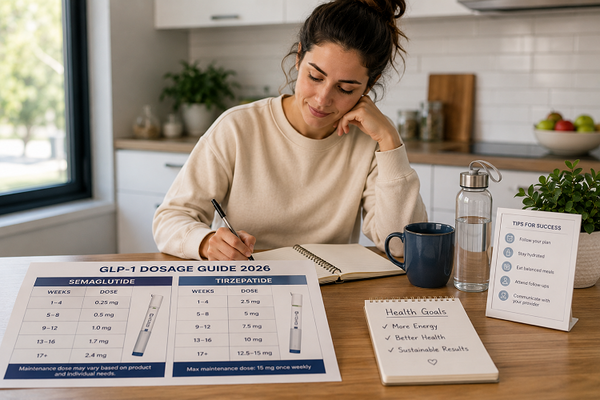
GLP-1 receptor agonists have become a key part of treatment for type 2 diabetes and obesity management. The clinical success of these therapies depends on careful dosing and titration. This guide provides physicians with evidence-based protocols for starting and escalating GLP-1 medications safely and effectively. Following the correct dosage pathway helps minimize adverse events while maximizing benefit. Both semaglutide and tirzepatide require gradual dose increases over weeks to months. Rushing escalation raises the risk of gastrointestinal side effects and patient drop-out.
What Is GLP-1 Therapy?
Glucagon-like peptide-1 (GLP-1) receptor agonists are injectable drugs that mimic incretin hormones. They enhance insulin secretion, suppress glucagon release, slow gastric emptying, and promote satiety. This results in improved blood sugar control and significant weight reduction in many patients. Semaglutide and tirzepatide are the most widely prescribed GLP-1 therapies; semaglutide is a pure GLP-1 agonist, while tirzepatide is a dual GIP and GLP-1 agonist. Both are administered subcutaneously once weekly.
Clinical trials have demonstrated major benefits, including HbA1c reductions of 1.5–2.5% and weight loss up to 20%. GLP-1 therapy is particularly valuable for patients with metabolic dysfunction who have not had success with lifestyle changes alone.
Why Titration Is Necessary
Gradual dose escalation is crucial for GI tolerability. Starting at a low dose lets the body adapt to delayed gastric emptying and increased satiety. Patients who start at higher doses have much higher rates of nausea, vomiting, and early discontinuation. Titration also allows physicians to find the lowest effective dose for each patient, striking a balance between benefit and side effects. Many reach treatment goals with intermediate doses, while others need the highest approved doses.
Semaglutide Dosing Schedule
The standard titration for semaglutide is:
- Start at 0.25 mg subcutaneously once weekly for 4 weeks. This low, subtherapeutic dose minimizes GI side effects.
- After 4 weeks, increase to 0.5 mg weekly. Many achieve blood sugar goals here.
- If needed, escalate to 1 mg weekly after 4 weeks at 0.5 mg.
- For weight management, further titrate to 1.7 mg then 2.4 mg weekly, with each step separated by at least 4 weeks.
Escalate doses no sooner than every 4 weeks to allow adaptation and reduce side effects.
Tirzepatide Dosing Schedule
Tirzepatide titration is similar:
- Begin at 2.5 mg subcutaneously once weekly for 4 weeks to establish tolerability.
- Increase to 5 mg weekly. If tolerated and more effect is needed, increase at four-week intervals to 7.5 mg, 10 mg, 12.5 mg, and up to 15 mg weekly.
- Most reach their target dose within 16–20 weeks.
Higher doses of tirzepatide provide greater weight loss and glycemic improvements. However, escalating above 10 mg should be carefully considered, especially for those experiencing GI side effects.
Side Effects During Titration
Common side effects with GLP-1 titration are GI-related and generally transient:
- Nausea or vomiting: Most common; usually improves after dose adjustment periods.
- Diarrhea or constipation: Results from delayed gastric emptying; usually resolves within 1–2 weeks.
- Abdominal discomfort/bloating: Typically mild and short-lived.
Rare but serious side effects include pancreatitis, gallbladder disease, and hypoglycemia (particularly when combined with sulfonylureas or insulin). History of medullary thyroid carcinoma or MEN 2 is an absolute contraindication.
Dose Adjustment Guidelines
Pause or slow dose escalation if a patient reports severe or persistent GI symptoms affecting nutrition or daily life. Most will adapt if kept at the current dose for an extra 4 weeks. Resume titration cautiously when symptoms resolve.
If glycemic or weight goals are not met, consider further titration if tolerability allows. Ongoing monitoring of HbA1c, fasting glucose, and weight guides these decisions. Hypoglycemia warrants reducing other glucose-lowering therapies rather than reducing GLP-1 dose.
Physician Oversight & When Not to Self-Adjust
Patients should never self-adjust their dose without physician input. Unsupervised changes increase risk of complications and may result in incorrect dosing.
Those using compounded or off-label forms are at even greater risk if deviating from prescribed regimens, since potency or absorption can be inconsistent.
Pregnant or breastfeeding individuals should avoid GLP-1 therapy. These medications are contraindicated during pregnancy and not recommended during lactation.
Clinical Best Practices
Physician oversight is vital for success with GLP-1 therapies.
- Schedule follow-ups at each dose escalation to assess side effects and progress.
- Order baseline and interval labs such as HbA1c, renal function, and lipase.
- Educate patients about correct injection techniques and rotating sites.
- Provide clear, written titration schedules so patients know what to expect.
Consider even slower titration for patients older than 65, those with gastroparesis, or with multiple comorbidities. Customizing titration can improve long-term adherence and prevent discontinuation.
Conclusion & Next Steps
GLP-1 receptor agonists are highly effective when dosed and titrated carefully, with personalized care and physician monitoring. Gradual dose increases reduce side effects and build patient confidence. Individualizing the plan helps optimize outcomes and minimize risks. For difficult cases or to refine a regimen, collaborate with an endocrinologist. Always partner with your patients and set realistic expectations for the titration process.